
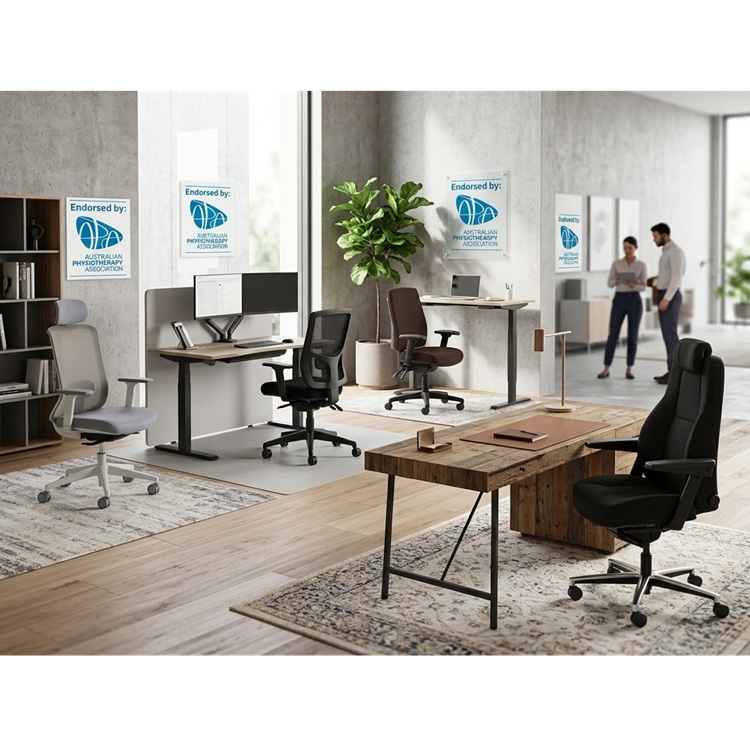
Sitting Healthy: What It Actually Means When a Chair is APA-Endorsed
Approved by Healthcare Professionals  https://www.iofficefurniture.com.au/product-category/chairs-endorsed-by-australian-physiotherapy-association/
If you’ve been shopping around for a new office chair lately, you have probably noticed a few models sporting a shiny badge of approval: Endorsed by the Australian Physiotherapy Association (APA).
In a world where almost every product claims to be “ergonomic,” seeing an official stamp from a major medical body carries some weight. But what does that endorsement actually mean for your back, your posture, and your wallet?
Let’s break down what goes on behind the scenes of an APA endorsement and why it matters for your workspace health.
The Core Promise: When the APA endorses a chair, they are verifying that its engineering aligns with proven musculoskeletal science. It isn’t a paid marketing gimmick; it’s a structural evaluation.
What Does an APA Endorsement Mean?
The Australian Physiotherapy Association is the peak body representing the interests of Australian physiotherapists and their patients. Because physios spend their days treating the fallout of poor sitting habits—like chronic lower back pain, tension headaches, and repetitive strain injuries—they are highly critical of furniture design.
For a chair to receive an official APA endorsement, it must undergo a rigorous evaluation process. It has to meet specific criteria designed to protect your physical health:
- Ergonomic Architecture: The chair must be designed around the natural curves of the human body, specifically supporting the lumbar spine (lower back).
- Active Posture Support: It must actively assist you in maintaining an upright, neutral spine, preventing the slouching that puts immense pressure on your spinal discs.
- Spinal Health Features: The chair must facilitate healthy blood flow and reduce overall muscle fatigue during extended periods of sitting.
The Checklist: Who Benefits the Most?
While a scientifically backed chair is a smart investment for anyone who spends hours at a desk, certain individuals will feel the benefits much more profoundly.
| Who It’s For | Why the Endorsement Matters |
| Desk-Bound Professionals | Those sitting 6+ hours a day need a chair that adapts to their movements and prevents long-term postural decline. |
| Individuals with Musculoskeletal Issues | If you suffer from sciatica, herniated discs, or chronic neck pain, a vetted chair minimizes the triggers that cause flare-ups. |
| Preventative Health Advocates | People who want to invest in their physical longevity before aches and pains actually start developing. |
Why You Can’t Rely on the Word “Ergonomic” Alone
If you search for an office chair online, you’ll find thousands of results labeled “ergonomic.” The reality is that “ergonomic” is a massive buzzword with very little legal regulation. Anyone can slap it on a product description.
That is exactly why independent body endorsements exist. When a chair carries the APA logo, it takes the guesswork out of the equation. You no longer have to cross your fingers and hope the product design team actually understands human anatomy—the physios have already checked their work for you.
The Takeaway
An APA-endorsed chair isn’t a magical cure for back pain on its own, but it is one of the most reliable tools you can introduce to your workspace. It provides the physical foundation your body needs to stay supported, aligned, and comfortable throughout the workday.
If you’re looking to upgrade your office setup, looking for that official physiotherapy stamp of approval is an excellent place to start.